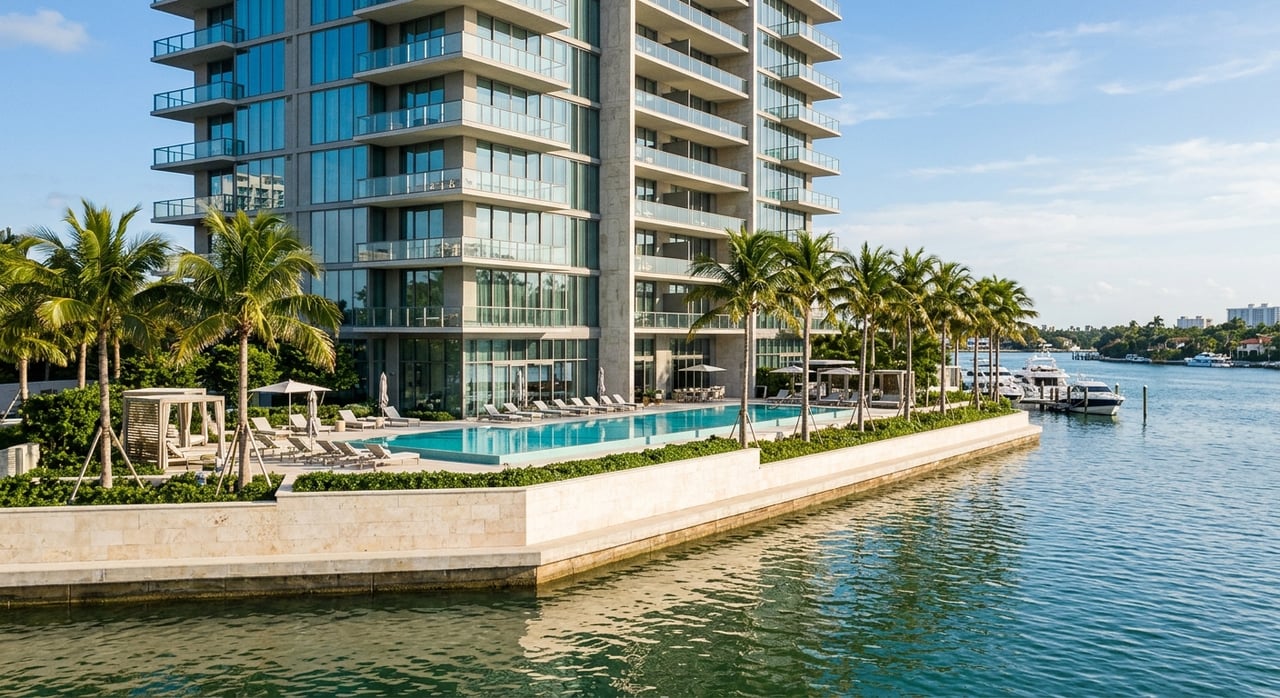
If you are eyeing a Downtown Miami condo as an investment, the short answer is yes, it can be smart, but only if you buy with a clear plan. This market offers strong rental demand, global buyer interest, and a lifestyle that continues to attract residents who want to live near transit, dining, and the urban core. At the same time, slower resale timelines, rising inventory, and condo-specific costs mean you need to look beyond the headline price growth. Let’s dive in.
Downtown Miami’s investment case starts with demand
Downtown Miami is best viewed as part of the Greater Downtown market, which includes Brickell, the Central Business District, Edgewater, and nearby districts. According to the Miami Downtown Development Authority, this area has more than 39,000 condo units, with about 10,000 more under construction. That pipeline would expand inventory by roughly 27%, which matters if you are thinking about future competition.
Even with more supply coming, pricing has remained strong in key submarkets. In the DDA’s 2025 analysis, average condo sale prices had nearly doubled since 2019, reaching about $939,000 in Brickell, $844,000 in the Central Business District, and about $1 million in Edgewater as of Q2 2025. Those numbers show that buyers continue to place a premium on well-located urban-core condos.
Countywide figures also support the broader market’s resilience. Miami-Dade’s condo and townhome median sale price was $445,000 in March 2026, up 1.7% year over year, while active inventory fell 8.1% year over year to 11,986 listings. Miami-Dade condo prices had also posted 14 straight years of appreciation as of May 2025.
Price growth is real, but resale can take time
One of the biggest mistakes investors make is assuming appreciation automatically means a quick exit. In Miami-Dade, existing condos had about 14 months of supply in May 2025, with a 93% median original-list-price receive rate, 63 days from listing to contract, and 104 days to sale. That points to a market where patience usually matters more than speed.
That same pattern shows up in Greater Downtown. The DDA reported average days on market of 150 in Brickell, 156 in the Central Business District, and 176 in Edgewater. In other words, a condo can still be a smart buy, but it generally fits a medium- to long-term hold better than a fast flip.
Rental demand is one of Downtown’s biggest strengths
For many buyers, the rental story is what makes Downtown Miami compelling. The DDA reported that Greater Downtown apartment rents rose 48.1% over five years to an average of $3,373 per unit. Condo rentals averaged $4,450 per unit, up 65.7% since 2019.
Luxury inventory has pushed that ceiling even higher. The same report found that luxury condo rents reached $7,894 per unit. For investors who want income potential in a premium urban setting, those numbers help explain why Downtown remains on the radar.
Recent metro rental data also show that urban-core neighborhoods are still drawing tenants. In March 2026, average rents reached $3,565 in Brickell, $3,533 in Wynwood, $3,274 in Edgewater, and $3,449 in Miami Beach. Miami Metro multifamily vacancy was 6.6%, and MIAMI REALTORS noted that high-income renters are helping support demand in Downtown Miami and similar neighborhoods.
Long-term rentals are usually the simpler play
If your goal is steady income with fewer surprises, a standard long-term lease is often the most straightforward option. It usually gives you access to a deeper tenant pool and avoids many of the restrictions that can come with transient rental use. That can make your ownership strategy easier to manage.
Short-term or furnished rentals may offer stronger gross income in some cases. The DDA reported average daily rates of $331 for short-term rentals and about $3,500 in average revenue per listing. Still, that strategy depends heavily on building rules, local eligibility, and operational setup, so you should never assume it will work just because a unit is in Downtown.
Transit and infrastructure help support long-term value
Downtown Miami is still evolving, and that matters for investors. The Miami DDA launched a 3D development map in March 2025 to track existing, under-construction, and proposed projects across Downtown, Brickell, and the Arts & Entertainment District. That is a strong sign the area is still in a build-out phase rather than a static market.
Transportation is another major part of the appeal. Tri-Rail began service to MiamiCentral in Downtown Miami on January 13, 2024. MiamiCentral also connects with Brightline, Metrorail, Metromover, and bus service, making Downtown a practical choice for renters and owners who value mobility and easier access across South Florida.
Public improvements are also moving forward. The City of Miami announced completion of section C of the East Flagler Street Beautification Project on March 3, 2026, with sections D and E still scheduled for spring 2026. The FDOT I-395/S.R. 836/I-95 project is expected to continue through late 2029, adding new connections and a signature bridge over Biscayne Boulevard.
These upgrades can strengthen the area over time, especially for walkability and connectivity. But they also mean you may be buying into several more years of construction activity, noise, and traffic changes near certain buildings.
Condo costs can make or break your return
A Downtown Miami condo is not just about purchase price and rent. Your real return depends on carrying costs, and that is where some buyers get caught off guard. HOA dues, insurance, reserve funding, and potential special assessments all need careful review before you commit.
This is especially important in older buildings. Florida’s Department of Business and Professional Regulation requires milestone inspections for residential condo and cooperative buildings that are three or more habitable stories, generally at 30 years and every 10 years after that, or 25 years in some local jurisdictions. The DBPR also states that structural integrity reserve studies are required for 3+ story associations at least every 10 years.
If reserves are not sufficient, associations may need special assessments, a loan, or a line of credit to stay compliant. The DDA also notes that regulatory assessments have already contributed to longer days on market in some neighborhoods. For investors, that means your underwriting should be conservative, especially in aging towers.
Building rules matter more than many buyers expect
Not every condo works for every strategy. If you are buying for rental income, you need to verify the building’s declaration, bylaws, rental caps, lease minimums, approval requirements, and any restrictions on furnished or transient occupancy. A beautiful unit in the wrong building can limit your options fast.
Short-term rental rules also require close attention. Miami-Dade states that short-term vacation rentals require a Certificate of Use in unincorporated areas and must comply with county and association rules. In the City of Miami, apartment or condo-hotel use is treated as a lodging use with its own conversion process and zoning review.
That means the practical question is not “Can Downtown condos be rented short term?” The better question is “Is this specific building and unit actually eligible for the rental plan I want?”
So, is buying a Downtown Miami condo a smart investment?
For the right buyer, yes. Downtown Miami offers strong rental demand, premium pricing in leading submarkets, international buyer activity, and improving transit and public infrastructure. Those are meaningful advantages in a market that continues to attract both lifestyle-driven buyers and income-focused investors.
Still, this is not a simple plug-and-play investment. You need to be comfortable with slower resale timelines in some buildings, rising competition from new supply, and the real impact of HOA costs, reserve funding, and possible assessments. In most cases, the smartest fit is a buyer who plans to hold for the medium to long term, prefers well-located buildings with transit access, and verifies rental rules before closing.
If you want a Downtown Miami condo that aligns with your lifestyle goals or your investment criteria, working with a local advisor can help you sort through building quality, resale risk, rental flexibility, and off-market opportunities. For tailored guidance on condos, investment property, and curated opportunities across Miami, connect with Tatsiana Hladkaya, PA.
FAQs
Is a Downtown Miami condo a good long-term investment?
- It can be, especially if you value rental demand, urban-core location, and medium- to long-term appreciation potential over a quick resale timeline.
Are Downtown Miami condos easy to rent out?
- Many are attractive to renters because of transit access, lifestyle appeal, and strong average rents, but each building may have its own lease rules and approval process.
Are short-term rentals allowed in Downtown Miami condos?
- Some may be, but eligibility depends on city or county rules and, just as important, the condo association’s governing documents and restrictions.
What should you check before buying a Miami condo for investment?
- Review HOA dues, reserve funding, milestone inspection status, potential special assessments, rental restrictions, and the building’s overall financial health.
Do older Downtown Miami condo buildings carry more risk?
- They can, because older buildings may face higher maintenance costs, inspection requirements, reserve obligations, and a greater chance of special assessments.
Which Downtown Miami areas are most relevant for condo investors?
- Brickell, the Central Business District, and Edgewater are key areas to watch because they make up most of the Greater Downtown condo supply and heavily influence pricing trends.